
Beyond Standard Cleaning
COVID-19 protocols elevate cleaning to infection control through increased disinfection frequency, EPA-approved COVID-19 killing disinfectants, proper contact time for pathogen elimination, electrostatic application for complete coverage, and documentation of service for stakeholder confidence.
High-Touch Surface Focus
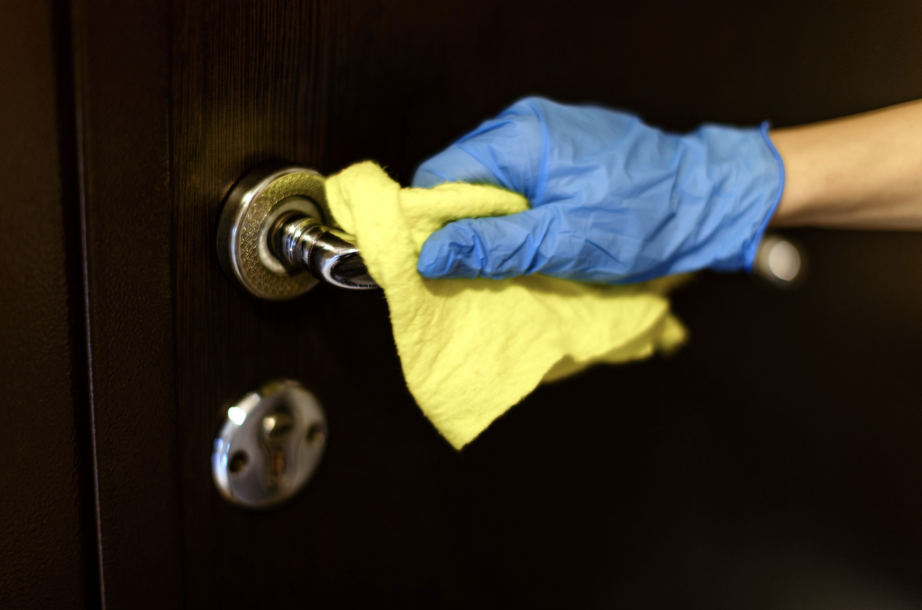
COVID-19 transmission occurs primarily through surface contact. Enhanced protocols target door handles, push plates, and pull bars, elevator buttons and handrails, light switches and thermostats, shared equipment and tools, conference room tables and phones, and kitchen appliances and break room surfaces.
Proper Disinfection Procedures
Effective COVID-19 disinfection requires specific techniques including pre-cleaning to remove organic matter, appropriate disinfectant contact time, proper product dilution ratios, correct application methods, and adequate ventilation during and after treatment.
Employee and Occupant Communication
Visible cleaning protocols build confidence through cleaning schedules posted throughout facilities, disinfection logs available for review, signage indicating recent sanitization, communication of protocols and procedures, and responsive management of concerns.
Touchless Technology Integration
Reducing touch-points decreases transmission risk through automatic door openers and touchless entries, hands-free restroom fixtures, motion-sensor lighting systems, touchless dispensers for soap and sanitizer, and contactless payment and check-in systems.
Return-to-Work Sanitization
Facilities reopening after closure require comprehensive preparation including complete facility disinfection before occupancy, HVAC system cleaning and filter replacement, verification of all systems and fixtures, deep cleaning of all surfaces and equipment, and COVID-specific protocol implementation.
Ongoing Maintenance Protocols
Sustained confidence requires consistent enhanced protocols through increased janitorial service frequency, daytime porter services for continuous attention, scheduled deep disinfection services, outbreak response protocols, and regular communication with occupants.
Industry-Specific Requirements
Different industries face different COVID protocol needs including healthcare facilities with patient protection, schools with student and staff safety, offices with employee wellness programs, retail with customer confidence measures, and food service with patron safety assurance.
Documentation for Compliance
Many businesses require documentation of COVID protocols for occupant information and regulatory compliance, insurance requirements, customer confidence measures, and liability protection.
The New Normal in Cleanliness
COVID-19 permanently elevated cleanliness standards. Even post-pandemic, employees and customers expect the enhanced protocols that became standard. Professional COVID-19 cleaning services provide the rigorous sanitization that demonstrates your commitment to health, safety, and stakeholder wellbeing. Adapt to elevated expectations with professional protocols that protect everyone.